For decades, the rule was simple. If you wanted electricity or natural gas at your facility, you bought it from your local utility — at whatever rate they decided to charge that year. There was no shopping. There was no negotiation. There was no choice.
That's no longer how every state works.
Across 15 states plus Washington D.C., energy markets have been opened to competition. In another 16, natural gas supply is open to competitive choice even when electricity isn't. In a deregulated state, your utility still owns the poles, the wires, and the pipes — they're still responsible for delivering energy reliably to your meter. But the company that supplies the actual electrons or molecules can be chosen, swapped, and forced to compete for your business.
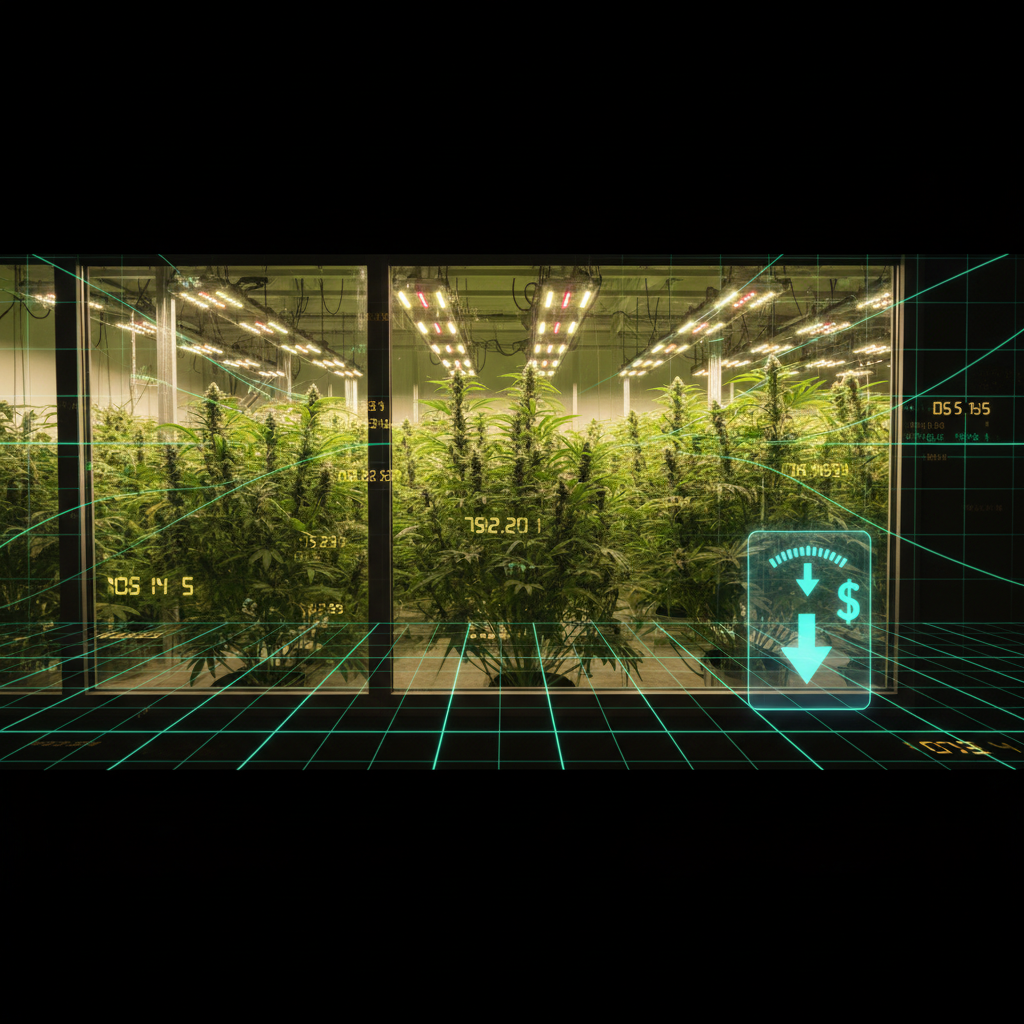
For cannabis cultivators, that distinction is the difference between treating energy as a fixed cost imposed on you and treating it as a strategic line item you can negotiate. Energy is the single largest operating expense for most indoor cultivation facilities. If you operate in a deregulated state and you've never run a competitive procurement, you are almost certainly overpaying — and the longer you wait, the more you lock in next year's rate hikes at today's already inflated prices.
This is the playbook we run for cultivation operators through HSCo Energy Savings: take your usage profile, drop it into a live reverse auction, and force every licensed supplier in your state to compete in real time for your business. The result isn't a "good" rate. It's the lowest rate the market is willing to give you, locked in for up to five years of price protection.
Where the Old Rules Came From
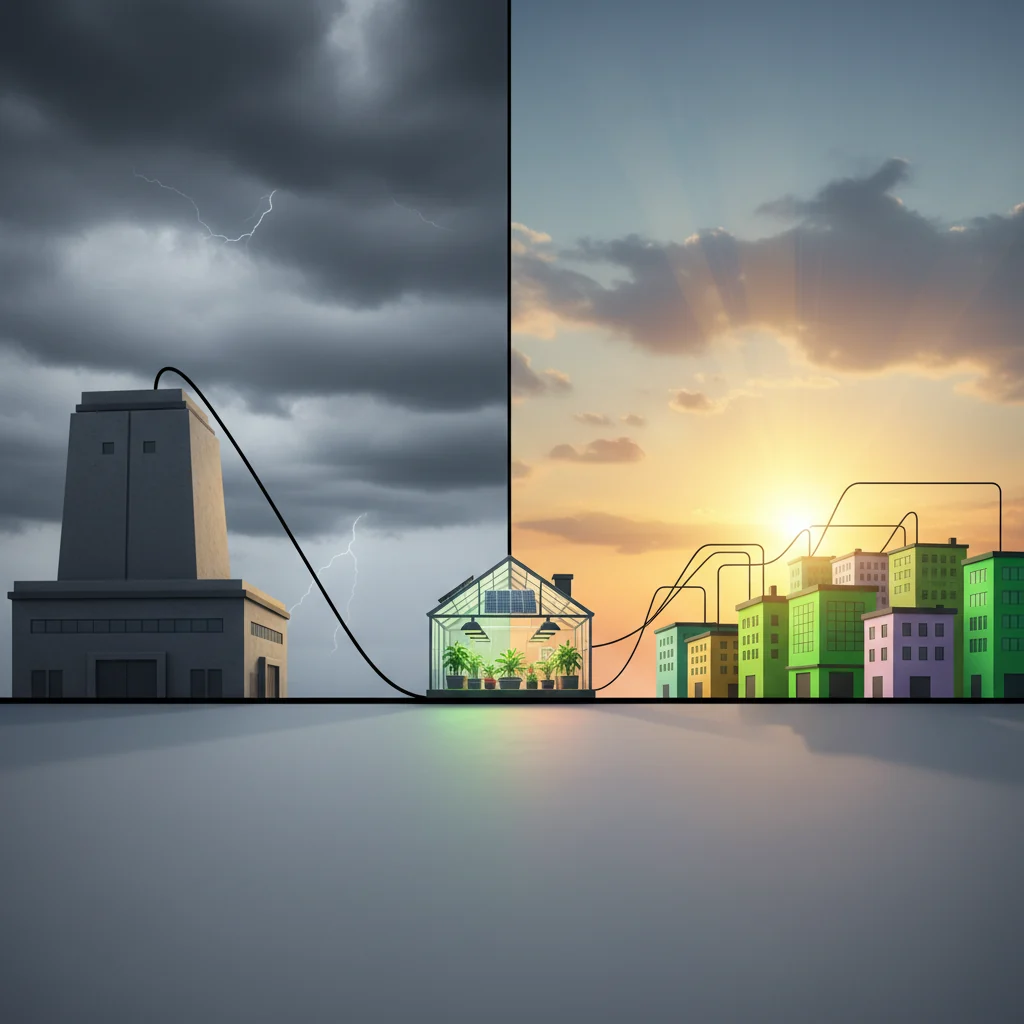
The U.S. electricity grid was built around the idea of a regulated monopoly. One utility owned the power plants, owned the transmission lines, owned the distribution wires, and sold the electricity. In exchange for the right to be the only game in town, the utility agreed to be regulated by a state Public Utility Commission (PUC), which set the rates.
That model worked when building infrastructure was the hard problem. It works much less well in 2026, when generation is competitive, the grid is interconnected across regions, and customers are sophisticated enough to value flexibility, sustainability, and price competition.
Starting in the 1990s, a wave of states passed deregulation legislation that separated supply from delivery. The local utility stayed in charge of the wires and pipes. But the actual commodity — the electrons, the natural gas — became something competitive licensed suppliers could sell directly to end customers. Reliability stayed regulated. Price became a market.
What "Deregulated" Actually Means
People hear "deregulated" and assume it means "less safe" or "less reliable." It doesn't.
In a deregulated state, the parts that need to be reliable are still regulated by the PUC:
- Transmission and distribution — the high-voltage lines, the local distribution network, the gas mains, the meter at your facility — all still owned and operated by the utility under PUC oversight.
- Service standards — outage response, line maintenance, safety inspections, emergency response — all still regulated.
- Billing protection — most states still require the utility to handle billing, even when a third-party supplier provides the commodity.
What's deregulated is the supply portion of your bill. That's the part that pays for the actual electricity or natural gas being generated and delivered to the grid on your behalf. In a regulated state, that line item is set by your utility's "default service" rate, which is updated periodically and almost never updates downward. In a deregulated state, that line item becomes a contract you sign with a licensed supplier — and that contract is something you can shop, compare, and lock in.
Deregulation didn't take anything away from the consumer. It added the right to choose. And every time competition is added to a market, prices fall and service improves — because nobody can take their customers for granted anymore.
The Deregulated States Map (2026)
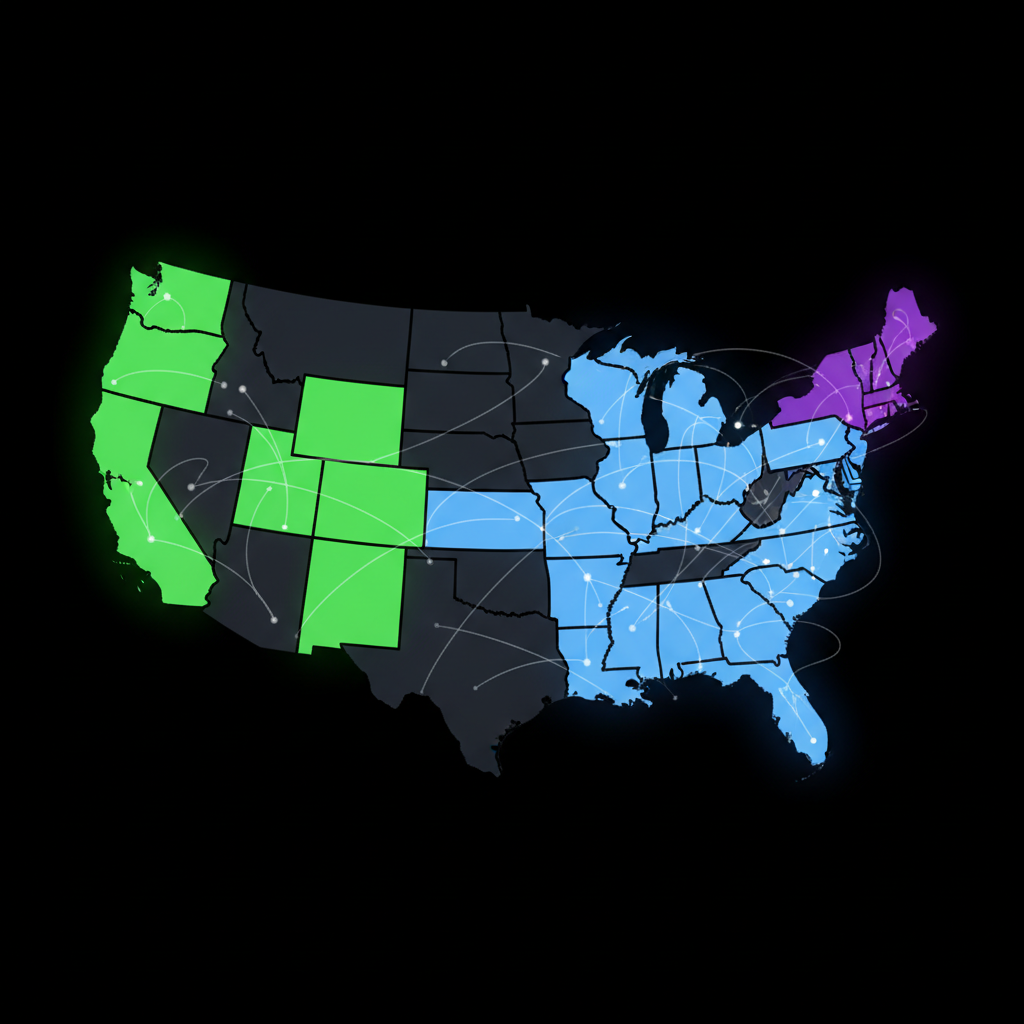
Here's where competitive supplier choice exists today. If your cultivation facility, processing site, or retail operation sits in any of these states, you have the legal right to put your supply contract out to bid — and you should.
Full Choice — Electric & Natural Gas
Natural Gas Choice Only
Partial / Pilot Electric Choice
Deregulation status changes occasionally. Some states have suspended or restructured their programs, and others have expanded eligibility for commercial customers. The fastest way to confirm what your specific facility qualifies for is to send us your most recent utility bill — the meter number and rate class on that bill tell us everything we need to know.
How a Reverse Energy Auction Works
This is the part most operators have never seen before, because traditional energy brokers don't do it.
A traditional broker calls a few suppliers, gets quotes back over a few days, picks the best one, and presents it as "your savings." The supplier never knows what their competitor offered. The customer never knows whether the rate could have gone lower.
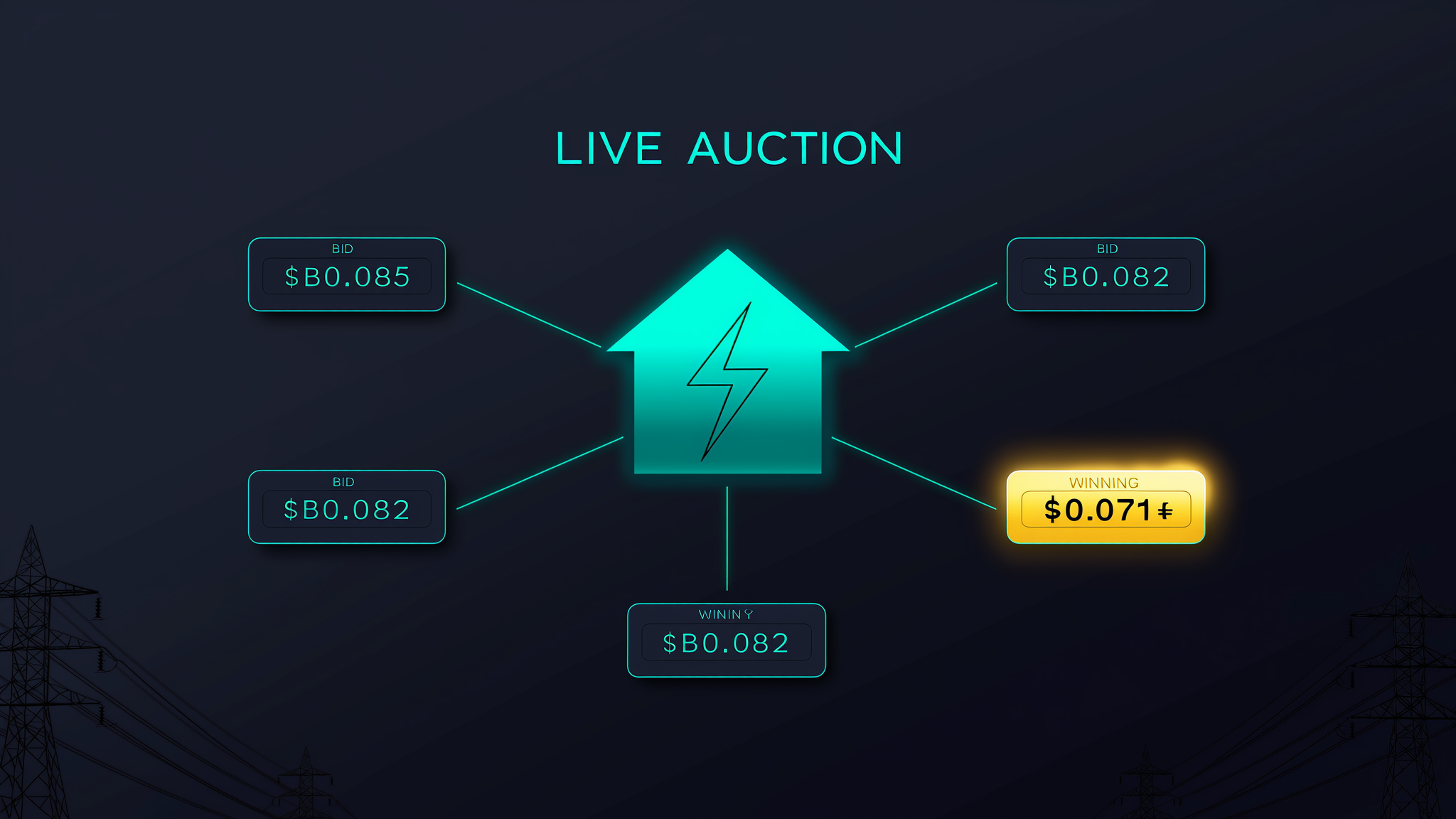
A reverse auction is the opposite. Every licensed supplier in your state is invited into a transparent online procurement event. Your usage profile — kilowatt hours by month, peak demand, load factor, rate class, term length — sits at the center of the auction. Suppliers can see your usage, and crucially, they can see each other's bids. If a competitor undercuts them, they can sharpen their pencil and re-bid up to three times.
- Upload your usage data. We collect 12 months of utility bills and build a clean usage profile. No facility audit, no site visit needed for a quote.
- Verify eligibility and contract structure. Confirm your facility's state, utility, rate class, account numbers, and any existing supplier contracts that need to expire first.
- Open the auction. Every licensed supplier in your state is invited. Each one sees your usage profile and submits an opening bid for the term you're shopping (12, 24, 36, 48, or 60 months).
- Live re-bidding. Suppliers see competing bids in real time. The supplier holding the lowest bid is visible. Outbid suppliers can come back with a sharper number — up to three rounds of re-bidding.
- Auction closes. The lowest verified bid wins. We deliver the contract paperwork, you sign, and the new rate goes into effect on your next billing cycle.
- Renewal protection. Before your locked term expires, we run the auction again. You never silently roll into a variable-rate "default service" trap.
Why Price Protection Is the Real Win
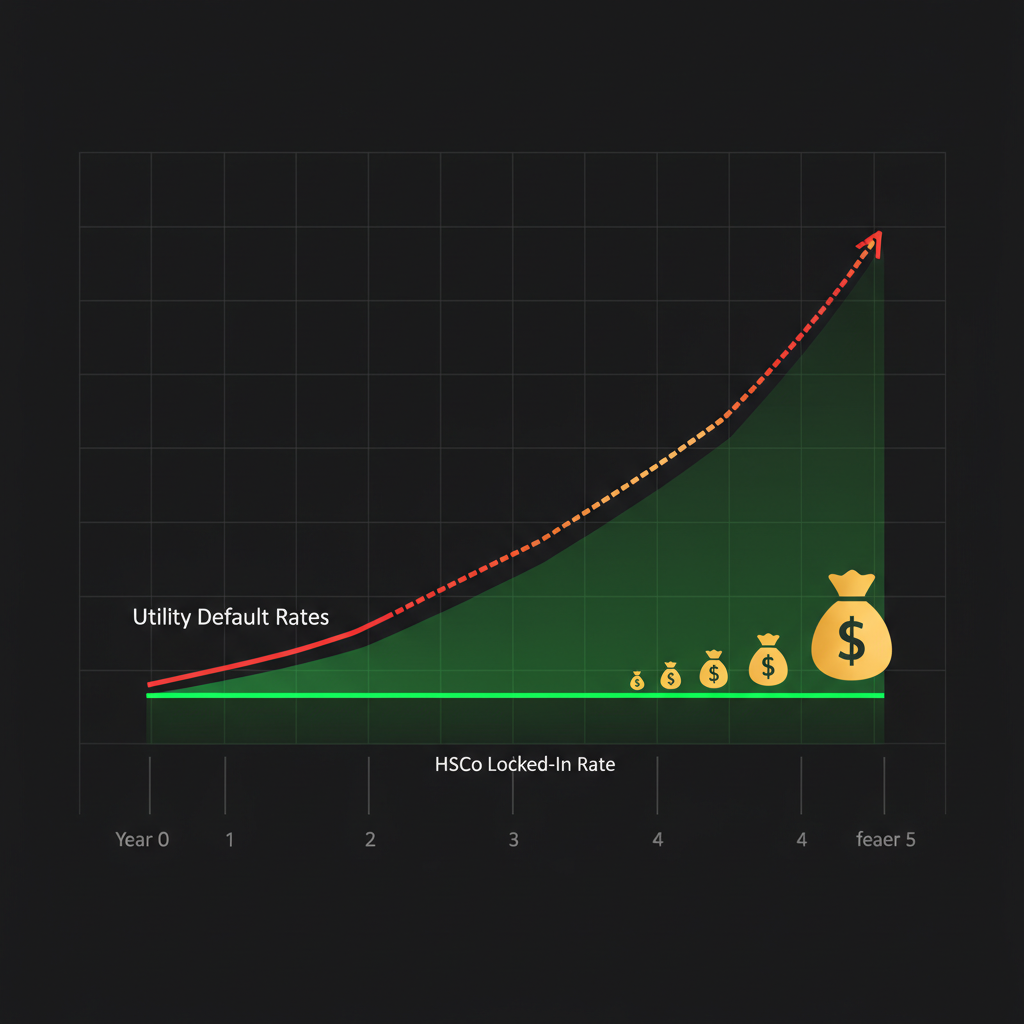
Getting a low rate today is good. Getting a low rate today and keeping it for five years while everyone else's bills climb is what separates a tactical win from a structural advantage.
Utility default rates rise. They almost always rise. Fuel costs spike. Capacity markets tighten. Transmission upgrades get passed through. Generation retirements pull supply off the grid. Every one of those forces shows up on your bill the next time the utility files with the PUC for a rate adjustment. If you're on default service, that adjustment is automatic. You don't get a vote.
A fixed-rate supply contract changes that math entirely. You sign for a per-kWh or per-therm rate that doesn't move for the term of the contract. Whatever happens to the wider market — heat waves, fuel price shocks, regulatory shifts — your supply rate is locked. You can budget the next 36 to 60 months of energy spend with the same confidence you budget rent.
For a cultivation facility, that predictability is worth almost as much as the rate itself. Energy is one of the few P&L lines that can wreck a forecast in a single quarter. Removing that volatility is the kind of operating leverage that lets you commit to expansion plans, take on wholesale contracts at fixed pricing, and run cleaner financial models for investors and lenders.
You can get price-protected up to 5 years
Once the auction closes, you lock the winning rate. You can be price-protected for up to 5 years — no surprise increases, no market volatility, no silent rate adjustments. Shorter terms are available if your situation calls for it (you're mid-contract, planning to relocate, or expecting a major usage change), but for most cultivation operators, the longer the term, the more years of protection you stack onto your P&L.
Why This Is Mission-Critical for Cannabis
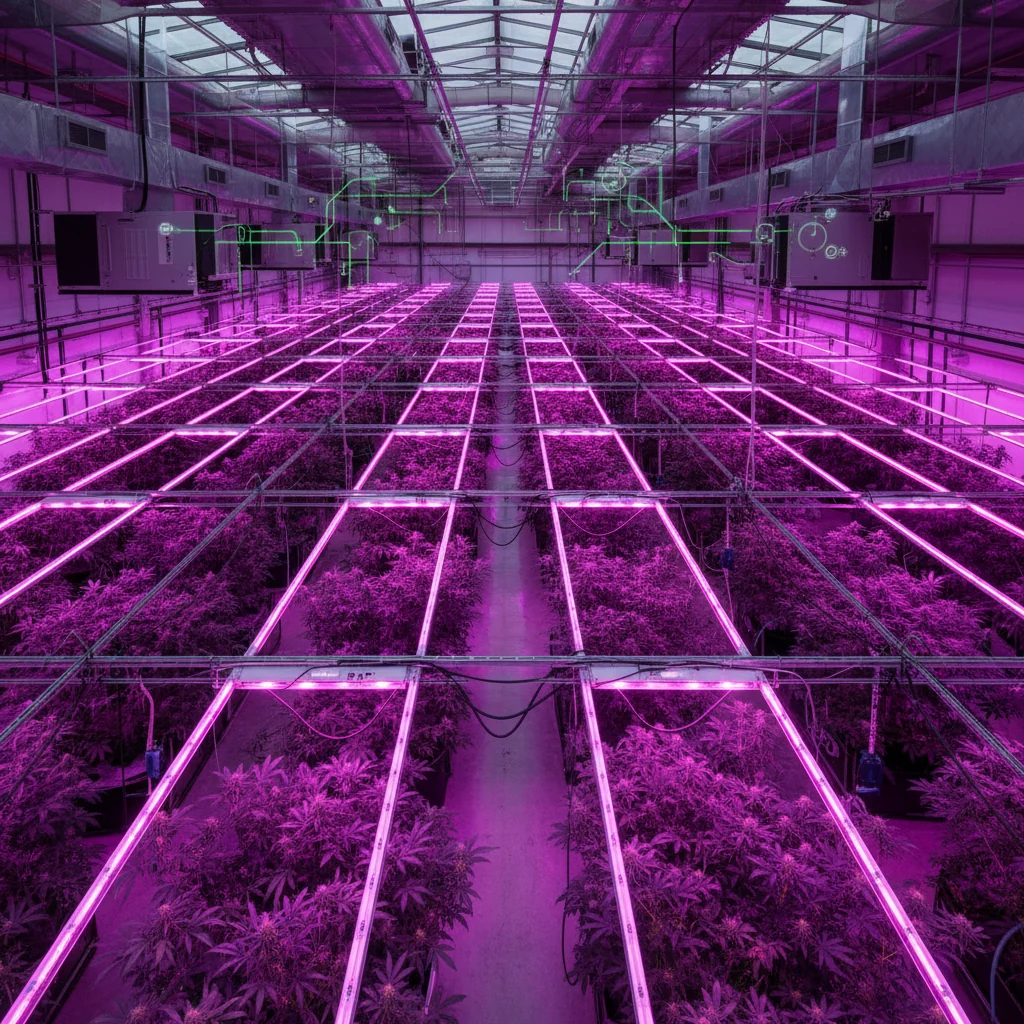
Most commercial buildings use energy like an office uses energy: lights during the day, HVAC for comfort, plug load for computers. A cultivation facility is on a completely different planet.
Indoor and greenhouse cannabis operations run high-output grow lighting 12 to 18 hours a day. They run dedicated HVAC and dehumidification 24/7 to hold tight temperature and VPD targets. They run CO₂ supplementation, irrigation pumps, fertigation injectors, root-zone temperature control, and post-harvest drying rooms — and they do all of it inside a building envelope that has been deliberately engineered to be airtight and thermally aggressive.
The result: electricity is typically the largest single operating expense in a cultivation facility's P&L. Bigger than payroll in some lights-heavy ops. Bigger than nutrients, packaging, or compliance combined.
That's why supply-side savings matter so much for this industry. A 10% reduction in your supply rate doesn't just reduce a bill — it shifts your cost per pound. It compounds with every other efficiency upgrade you've already made on lighting, HVAC, and irrigation. Energy procurement isn't a finance trick. It's an operational lever, and in deregulated states, it's the one most operators have never even pulled.
What this looks like across deregulated cannabis states
- Massachusetts & New Jersey — Mature adult-use markets with aggressive default-service rate increases. Cultivators here see some of the largest dollar-savings on competitive supply.
- New York — ESCO (Energy Service Company) market is well-established. Tight cultivation regs make energy budgeting critical for license-holders managing investor expectations.
- Illinois — Both ComEd and Ameren territories are open to choice. Indoor grow energy load makes IL one of the highest-impact states for procurement savings.
- Pennsylvania & Ohio — Long histories of deregulation, deep pools of competitive suppliers, and very active reverse-auction markets.
- Connecticut, Maryland, Maine, Rhode Island, New Hampshire — Smaller markets but consistent supplier participation; cultivators in these states often skip procurement because they assume the market is too small. It isn't.
- Michigan — Limited electric choice (capped opt-out), but commercial cannabis facilities are often eligible. Worth confirming case-by-case.
- Texas — Fully open ERCOT market, the deepest competitive supplier pool in the country. Cultivation operators here have the most to gain.
If you're in a natural-gas-only state — California, Colorado, Florida, Georgia, Virginia, or others on the gas-only list — gas is still very much in play. Drying rooms, water heating, boiler systems, and any thermal demand for your facility can be supplied competitively even when electricity is regulated.
Get Your Free Savings Analysis
Send us your most recent energy bill — electric, gas, or both. We'll run a no-obligation analysis showing exactly what a competitive procurement could save you, and which suppliers in your state are most likely to bid aggressively. There's no commitment to take the contract.
Request received.
We'll run your savings analysis and reach out within 1 business day.
Why Use HSCo Instead of a Traditional Broker
Most energy brokers do this work in a back room. They call three suppliers, take the best of three quotes, and pocket a margin. The customer never sees what was offered or what was rejected.
That model survives because most buyers don't know there's a better one. There is.
- Transparency. Every supplier in your state is invited and every bid is recorded. You see the full leaderboard, not just the winner.
- Real competition. Suppliers see each other's offers and can re-bid. That's what drives the rate to the floor.
- Industry fit. We work with cultivation operators every day. We understand load profiles, harvest cycles, demand-charge exposure, and how cannabis P&Ls actually break down. That context shapes how we structure the auction and which contract terms we recommend.
- Renewal protection. Most "savings" disappear at renewal when contracts silently roll into variable rates. We monitor every term and re-auction before that ever happens.
- Bundled with the rest of your facility's utility strategy. Energy procurement is one piece. Water optimization, on-bill audits, sustainability planning, and rebate stacking all live under the same Utility Savings program.
What to Do Right Now
- Confirm whether your state is deregulated for electric, gas, or both. The lists above cover every state where competitive choice is available in 2026.
- Pull your most recent utility bill. One bill is enough to start. The account number, rate class, and usage history are all on that page.
- Check your existing supplier contract — if you have one. Most facilities are on default utility service without realizing it. If you're already on a competitive contract, note the end date so we can run the next auction at the right time.
- Send it to us. Use the form above or email seanb@hydrosupply-co.com. We'll come back with a side-by-side analysis of what a competitive procurement could save you, with no obligation to move forward.
The Takeaway
Deregulation is one of the most under-used advantages available to cannabis operators today. The states that allow competitive supplier choice have effectively handed cultivators a free lever to lower their largest operating expense — and the only thing required to pull that lever is a recent utility bill and 30 minutes of attention.
Energy is going to keep getting more expensive on default utility service. That's not a forecast — it's a pattern that has played out year after year for two decades. The operators who win the next cycle will be the ones who locked in 3 to 5 year fixed rates while their competitors stayed on default service and watched their bills climb.
If your facility is in a deregulated state, the question isn't whether to run a procurement. It's how soon you can get the bill in front of suppliers.
Ready to See What Your Facility Could Save?
Free savings analysis. No commitment. We do the auction work — you keep the savings.
Run My Free Savings Analysis Learn More About HSCo Energy Savings